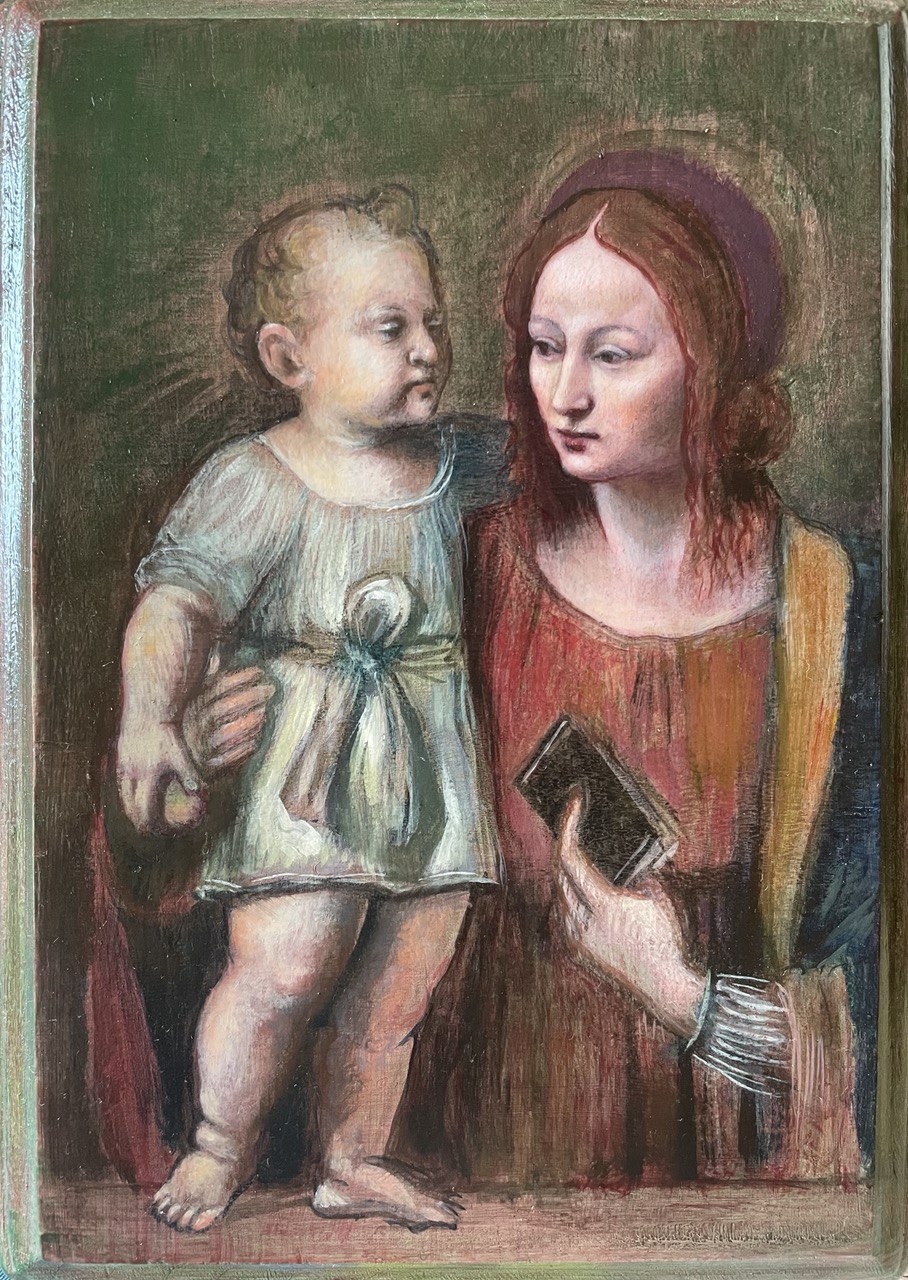

I came across a photo in our family album that my daughter was playing with. I really didn’t know it existed. Krzys must have snapped it. It shows the exact moment when I held my son for the first time.
I should have been happy. But I was only angry, distressed and confused—even ashamed of my own inner reaction. This was not what it was supposed to be like. I couldn’t smell him. After three days of separation, after having him removed from my body and whisked away without my so much as touching him, he seemed like someone else’s child.

I’m over the moon for this kid today. But something is missing. When I think of his birth, I can’t help but feel a deep sense of loss—as if I were robbed. As if my son were never fully restored to me. Maybe it sounds crazy, ungrateful even, but the heart has reasons of which reason knows nothing. When the natural bonding process of the third stage of birth is interfered with, even justifiably so (which I am not convinced was the case here), damage is done.
I’ve done a lot of work to heal this. I’ve forgiven. I’ve prayed. I’ve bonded with him and adored him and nursed him. I’ve celebrated his birthday and done art about it and rewritten the story through the lens of faith. I am still doing that now. But I’m not sure if or when or how the damage will ever be fully recovered. Perhaps not until every tear is washed away in the Kingdom. Or until I can have another child and “get it right.” But what if I can never have another child?
I must have looked distressed as I was thinking of all this. Krzys came over and said, “I’ll put the kids down. Go walk.” Sweet mercy.
It was another “medicine walk,” as I call them. These have become indispensable. I’m not yet able to describe what goes on during my medicine walks in the language of drawing, though as a painter, I sorely wish I could. That’s why I’m stuck with words. Words in English. Words, words, words. Words like worms beneath my feet in the mud, coursing through the substrate, pulsing invisibly like blood in the veins of the forest floor.
There was a little bird with a big worm in its mouth. He was proud, and kept leaping from one bush to another with that dangler, as a few smaller birds chased after trying to filch it from him. I first saw him as I passed the Hoyt road trail, the place that comes after Fern Alley and Shannon’s Shin. (I like this trail because “Shannon” is my midwife’s name. Shannon—another word.) And there have been graces on this trail before.
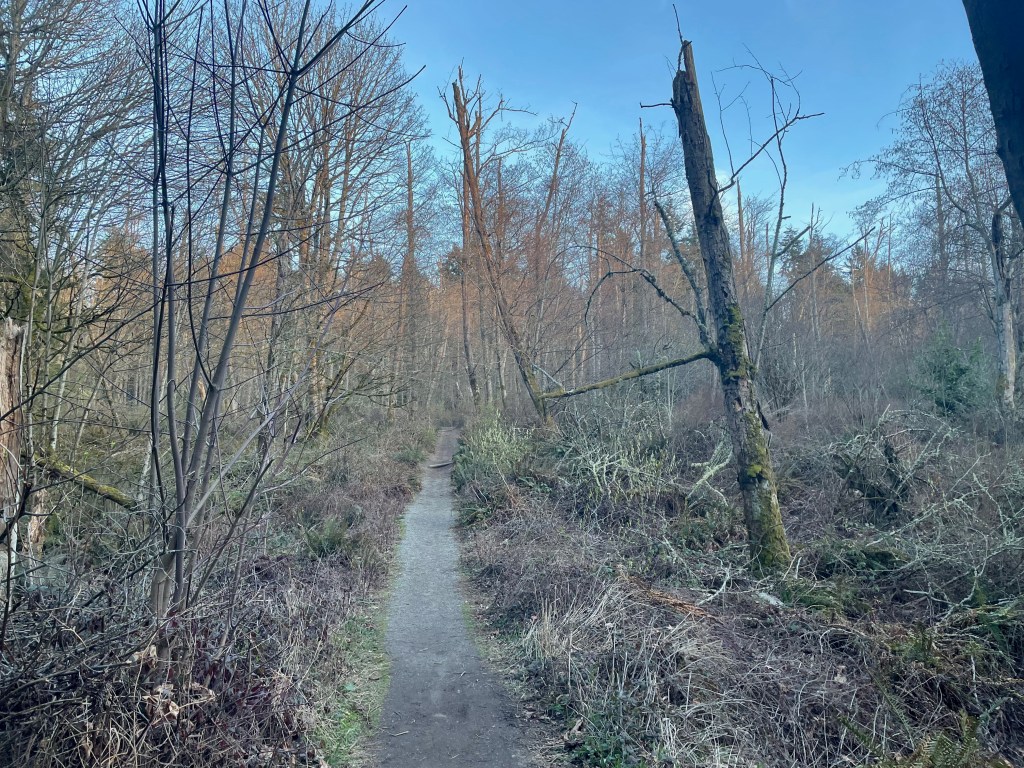
And so there was another one in this dusk time walk; when the lichen stood out from so many bare winter twigs; the finest jewelry in the simple raiment of this portion of nature. Points of light amidst a tunnel of gray, wistful trees and their ineffable shadows.
If I could have painted it, I would have done it like my old professor, Ann Gale, would have done, and in her mind she would have done it like Giacometti—only she’d do it much more beautifully. It would have been a woven tapestry of glittering grays, with the pale green lace of lichen glowing like phosphorescence, stealing the show.
The words of the Swords of Sorrow pound away in my ears (I like to listen to a recording of the prayers as I whisper them out myself) keeping my pace up as I drink the sight of it all. Often I drift away from the tinny sound of that dear, recorded voice, but more often the Irish brogue keeps me company, when the gloom of the woods might otherwise cause me to feel too alone.
“But Michael,” says an inner voice (prompting me to remove both earbuds so I might hear this one more clearly). I knew it was about to answer a question posed several days before on the trail.
“You DO know something about how she might have sorrowed when He was lost in Jerusalem three days. Your son, too, was absent from you three days, and you didn’t fear for his death, or have any inclination to question God, but only sorrowed that he was gone from you.”
“This is true,” replied me. “But I had an ego in it. Nothing made my sorrow bitter more than the idea that human beings might keep him from me for no good reason that I could see. And that it wasn’t my decision, nor was I consulted, or even considered. There, I fall FAR short of Our Sorrowful Mother’s perfection.”
Then quickly, before the notion had time to escape me:
“I now offer up the sorrow of the three days of separation from my own son, and everything that went wrong in his birth, and the loss of the birth, and all the other painful things, for your intentions, O Sorrowful Mother. I trust you know what is best to do with them.”
I began to imagine her taking the child with her husband to the temple just a few days before to make their offering. Perhaps it was nothing more than a sparrow offered up. How like a little sparrow, offered up, was Jesus to His Mother. She must have offered him up continuously, knowing in perfect faith that God has his eye upon even the sparrow. This notion moved me unexpectedly.
And just then, the sparrow appeared to my sight, startled into the path, then out again, greedy for this reassuring worm.
 Michael Shelby Suberlak
Leave a comment